Flüssigsauerstoff-Gesteinsspalttechnologie für kontrollierte Aushubprojekte
Liquid Oxygen Rock Splitting Technology for Controlled Excavation Projects
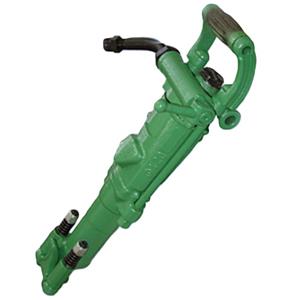
Rock breaking is a familiar challenge in mining, road construction, railway foundation works, excavation pits, tunnel preparation, and site grading. Conventional blasting can deliver high production rates, but it may also face strict permitting, site-control, vibration, noise, and access requirements. Mechanical breaking can be suitable for some jobs but may bring limitations in productivity, cost, or machine access.
Liquid oxygen rock splitting is one of several controlled rock-fracturing approaches considered for restricted or sensitive projects. It should be evaluated as a project-specific engineering option rather than a universal replacement for established rock-excavation methods.
What Is Liquid Oxygen Rock Splitting?
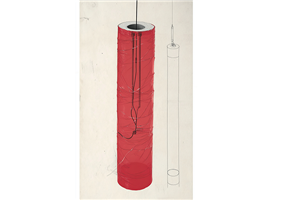
At a high level, liquid oxygen is a cryogenic industrial gas. In a purpose-designed and professionally managed system, controlled gas expansion is used to apply force within a rock-breaking assembly. That force can act on the rock mass and its natural discontinuities, supporting controlled fracturing and subsequent excavation.
The technical principle is only one part of the decision. Successful project use also depends on rock strength, joint patterns, groundwater conditions, excavation geometry, nearby structures, production goals, material logistics, equipment compatibility, and the local regulatory environment.
Yantai Gaea focuses on discussing those real project conditions before recommending a suitable solution.
Where Controlled Rock Splitting May Be Considered
Liquid-oxygen-based rock splitting may be discussed for projects where contractors need to carefully assess the effects of excavation on the surrounding environment. Typical application categories include:
Mine development and selected quarry operations
Highway and railway formation works
Rock excavation for foundations and basements
Site leveling and trench-related works
Secondary breaking of oversized rock
Tunnel-related rock removal and support preparation
Projects close to buildings, roads, utilities, or other sensitive assets
The suitability of any method must be verified for the individual site. A large quarry or high-volume mine operation may still favor conventional drilling and blasting because of production scale. In contrast, a smaller restricted work zone may place greater value on controlled execution, logistics flexibility, and reduced disturbance.
Project Design Is More Important Than a Product List
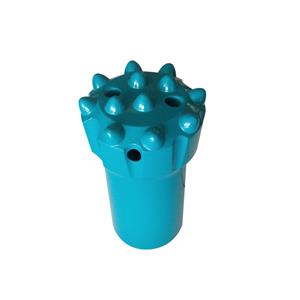
A rock-splitting system should never be selected only from a catalog. Different formations react differently: hard, massive rock can behave very differently from fractured rock, weathered rock, water-bearing strata, or rock close to a free face.
Before selecting equipment, a project team should review:
Geological and geotechnical information
Rock mass condition and discontinuities
Site access and available work space
Nearby structures and allowable disturbance
Excavation sequence and disposal arrangements
Material supply and weather exposure
Workforce competence and supervision
Required permits, safety controls, and emergency planning
Yantai Gaea can support early-stage technical communication so customers can determine whether liquid oxygen rock splitting, another gas-expansion method, mechanical breaking, or a combined approach is more appropriate.
Efficiency and Cost Evaluation
The cost of a controlled rock-breaking method cannot be assessed only by comparing the price of consumables. Drilling, labor, equipment transport, work-zone preparation, operator training, supervision, production pace, and post-break excavation all contribute to total project cost.
For some limited-volume or difficult-access applications, a specialized system may offer practical advantages. For large and uniform rock masses, traditional methods may retain a clear scale advantage. A credible cost evaluation should therefore be based on a site-specific trial, realistic production assumptions, and the project’s safety and environmental constraints.
Safety, Environmental Control, and Compliance
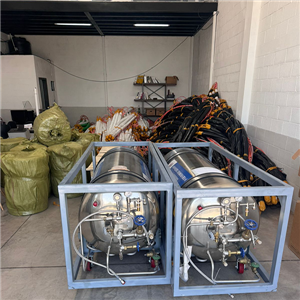
Liquid oxygen is a strong oxidizing cryogenic material. Any liquid-oxygen-related rock-breaking work requires strict material compatibility, transportation control, storage discipline, trained personnel, suitable protective measures, controlled access, and an approved site safety plan.
The system must be operated only by trained and authorized personnel in accordance with applicable laws, project approvals, equipment documentation, and local requirements for industrial gases, workplace safety, fire prevention, and environmental protection. Performance, cost, vibration, and environmental claims should be validated for the actual project rather than treated as universal outcomes.
Yantai Gaea supports a responsible engineering pathway: understand the site, confirm compliance obligations, choose an appropriate rock-breaking method, prepare a documented plan, and implement the work under qualified supervision.